

Conclusions
This research proposed an evaluation method of urban agglomeration integration based on multi-variate big data. This method effectively avoids the error in results caused by the use of single data in traditional methods through comparing and combining results from different data sources.
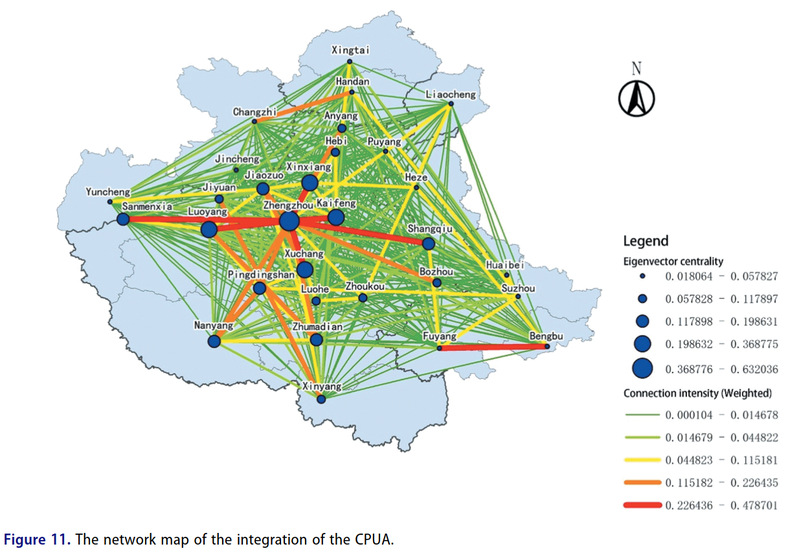
The results show that the CPUA is a multi-circle structure with the Zhengzhou metropolitan area as the core and other surrounding cities as the devel-opment hinterland. The development of the inte-gration of this urban agglomeration is still affected by some factors such as the allocation of spatial resources, the gravity of the surrounding urban agglomerations and the differences in cross-provincial development policies. The evaluation system and methodology will be mainly used for the evaluation and validation of the integrated development of urban agglomerations in the future.
Moreover, this study demonstrates the variability of different data sources and the reasons for these differences. This contribution will help other stu-dies related to the evaluation of urban agglomerations in terms of data selection.